
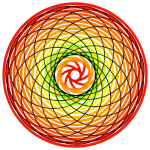
What is a Mandala?
At its core, a mandala (a Sanskrit word for “circle”) is a geometric design that represents the universe, a spiritual journey, or a sense of wholeness. It is a container for the spirit and a map of the cosmos.
While mandalas have deep roots in ancient spiritual traditions, they have become a universal symbol for harmony, balance, and the beauty of creation. They serve as a reminder that we are all connected, part of a greater, intricate pattern. This page is your guide to their rich history and profound meaning.
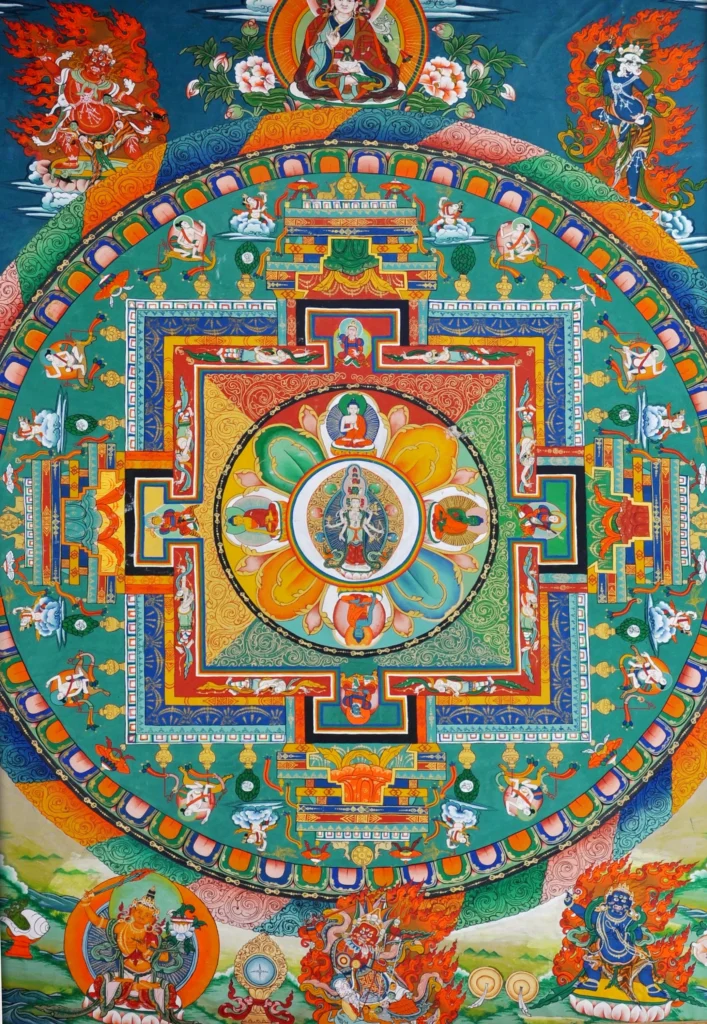
Avalokiteshwara Mandala, ceiling painting at Thiksey Monastery (17th century). Photo by Prof. Ranga Sai, via Wikimedia Commons. Licensed under CC BY-SA 4.0.

The Symbolism Within the Circle
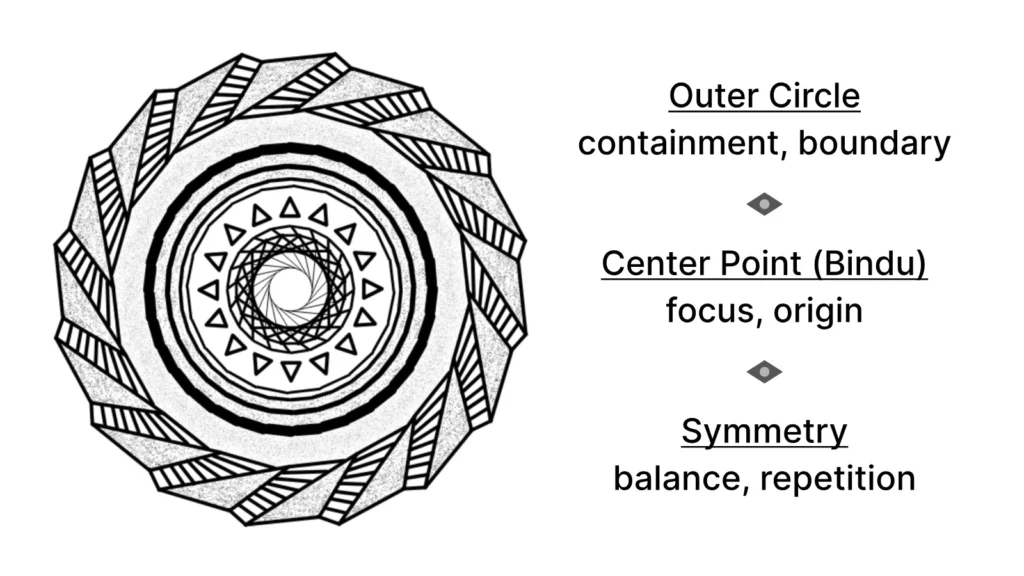
A mandala is more than just a beautiful piece of art; it is a story told in the language of symbols. A few core elements give a mandala its deep sense of meaning.
The Circle
The outer circle represents the universe in its entirety, as well as the cyclical nature of life. It creates a sacred space, a container for the essential elements within, symbolizing unity, eternity, and a feeling of completeness.
The Center Point (Bindu)
The journey of a mandala begins at its center, a single point known as the Bindu. This dot represents the very beginning—the source of all creation, the seed from which the universe unfolds. It is a place of stillness and pure potential.
Symmetry
The repeating, balanced patterns in a mandala reflect the harmony and order of the cosmos. Symmetry represents the interconnectedness of all things and the importance of balance in our own lives, creating a visual experience of calm and stability.

A History That Spans the Globe
While most famously associated with the Hindu and Buddhist traditions of Tibet, India, and Nepal, the mandala is a truly universal human expression. Similar circular designs representing wholeness and the cosmos appear across nearly every culture and time period.
You can see the spirit of the mandala in:
- The intricate rose windows of Gothic cathedrals.
- The interlocking patterns of ancient Celtic knots.
- The monumental calendar of the Aztec Sun Stone.
- The sacred sand paintings and medicine wheels of Native American cultures.
Creating a mandala is a way to participate in this timeless, shared human experience of finding meaning in shape and form.
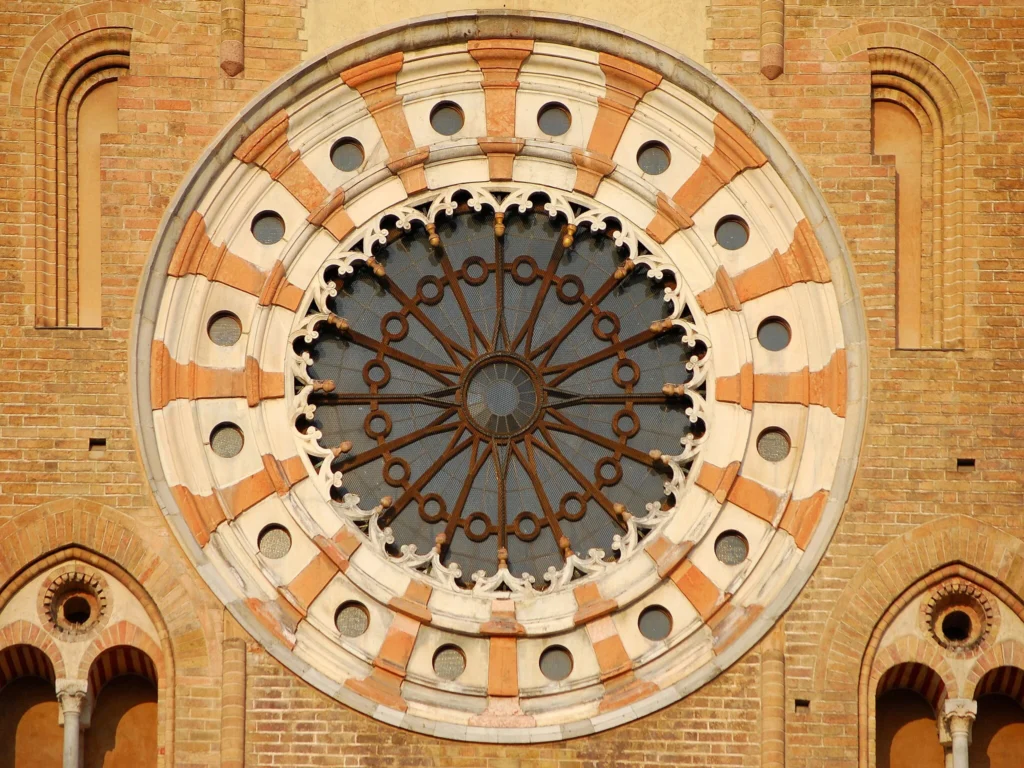
Rose window, Basilica Cathedral of Lodi (Italy). Photo by Etienne. Public domain, via Wikimedia Commons.

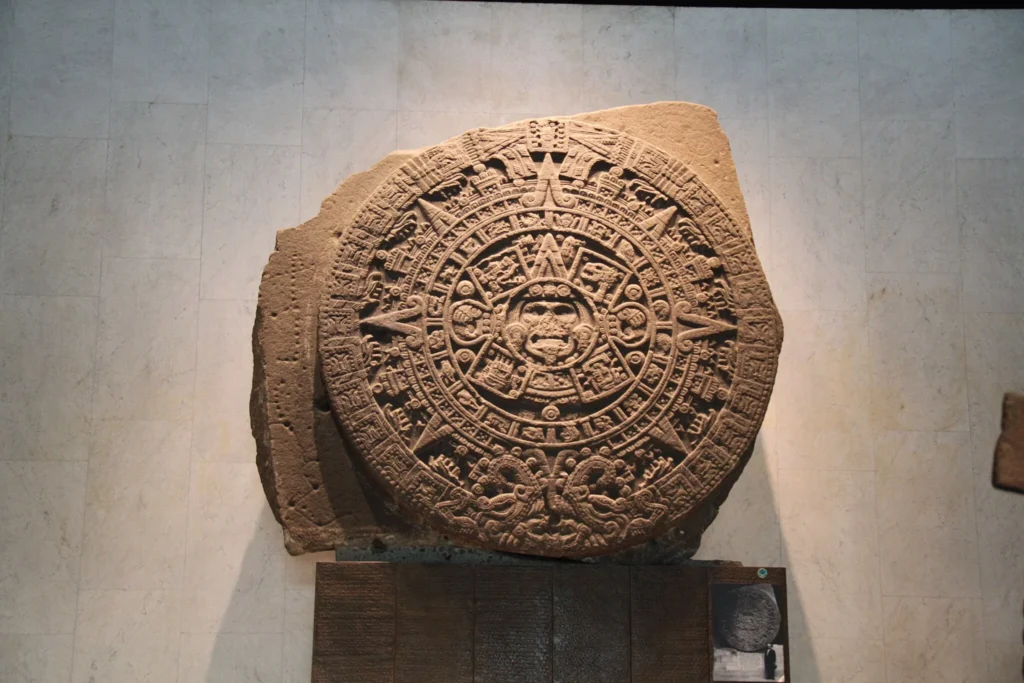
Aztec Sun Stone (Calendar Stone), National Museum of Anthropology, Mexico City. Photo by Gary Todd, via Wikimedia Commons. Public domain (CC0).
.jpg)
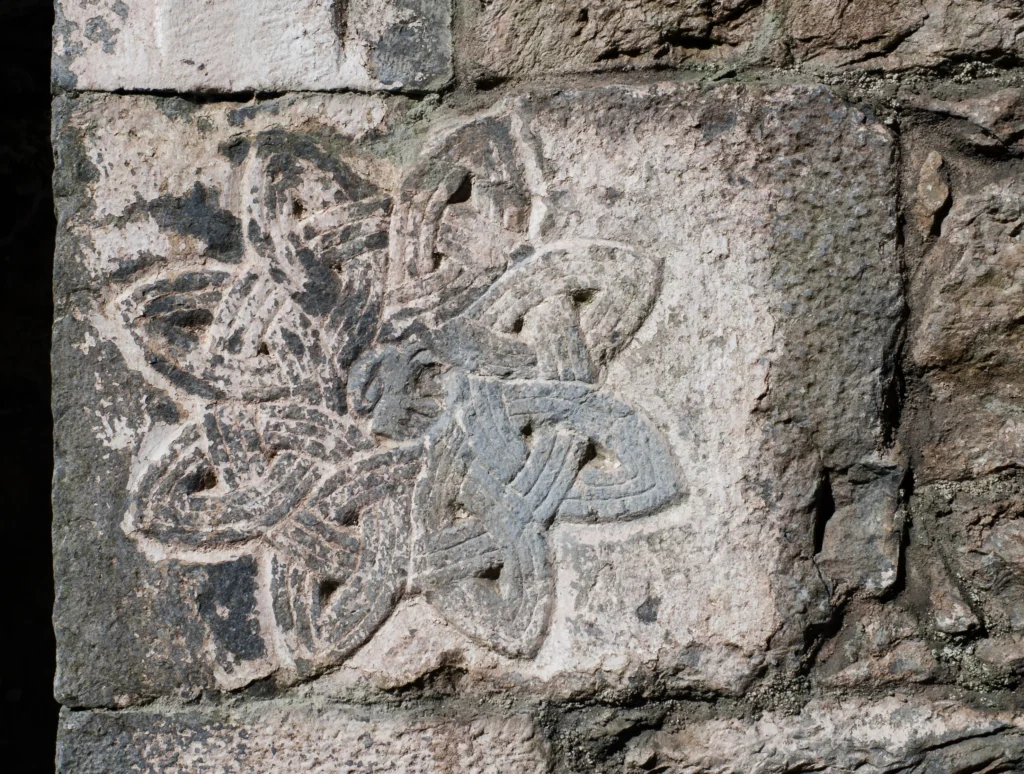
Carved Celtic knot, Cahir Priory (County Tipperary, Ireland). Photo by Andreas F. Borchert, via Wikimedia Commons. Licensed under CC BY-SA 4.0.

How We Use Mandalas Today
In the modern world, the mandala has found a new purpose beyond ancient rituals. It is now widely embraced as a powerful tool for mindfulness, meditation, and personal growth.
The focused, repetitive act of creating or coloring a mandala is a proven form of art therapy, helping to calm the mind, reduce stress, and improve focus. It provides a peaceful escape from the noise of daily life and allows for a moment of active meditation. For many, it is simply a joyful way to unlock self-expression and create something beautiful and meaningful, regardless of artistic skill.
Your Invitation to Create
Reading about a mandala is one thing, but creating one is where the real magic happens. The journey of choosing shapes, colors, and patterns is just as important as the final product. It’s a snapshot of your feelings and a reflection of your inner world at a single moment in time.
If you’re curious about the benefits of this timeless practice, we invite you to continue your journey by reading about The Joy of Creating Your Own Mandala.